Tumble Dryer Buying Guide 2026:
What Really Matters?
Before buying a tumble dryer, you should know these criteria. Our guide helps you make the right choice – without wasting money.
1. Heat Pump, Condenser or Vented?
These three dryer types work very differently. Here are the most important differences:
Heat Pump Dryer
A heat pump dryer recycles the warm air used in drying, making it the most energy-efficient option. Instead of expelling heat, a refrigerant circuit extracts moisture and reheats the air. Result: up to 50% lower electricity costs. Ideal for households that dry laundry frequently. Requires no external ventilation – condensed water collects in a tank or drains away directly.
Condenser Dryer
A condenser dryer heats air with an electric element and condenses moisture into a water tank. More affordable to buy than heat pump models but significantly more expensive to run. A good choice if budget is tight and the dryer is used infrequently. Also requires no external ventilation.
Vented Dryer
A vented dryer expels moist air through a hose to the outside. The cheapest type to buy and fast to dry, but requires a hole in the wall or an open window. Only recommended for utility rooms with permanent ventilation access.
2. Heat Pump vs. Condenser – The Detailed Comparison
Heat Pump Dryers – The Best Choice for Most
- Up to 50% lower running costs vs. condenser dryers
- Lower drying temperature – gentler on fabrics
- No external ventilation required
- Automatic moisture sensing stops cycle at optimal point
- A+++ energy class available – significant long-term savings
Condenser Dryers
- Lower purchase price (from approx. €300)
- Faster drying times
- Higher running costs (approx. 30–50 € more per year)
- Not recommended for frequent use
- Maximum energy class: typically B or A+
Vented Dryers
- Cheapest to buy (from approx. €180)
- Fastest drying
- Requires permanent ventilation to outside
- Highest running costs
- Only suitable for dedicated utility rooms
3. The 6 Most Important Buying Criteria
1. Energy Class
For frequent use (3+ times per week) invest in A+++ – the savings quickly outweigh the higher purchase price. For occasional use A++ is acceptable. Avoid energy classes below A++ for new purchases.
2. Capacity
Match the dryer capacity to your washing machine. 7 kg for 1–2 persons, 8 kg for 3–4 persons, 9 kg for large families or bulky items. Always load to a maximum of 80% for best results.
3. Noise Level
For installation near living areas or bedrooms aim for below 65 dB(A). The quietest models in our test (Miele, Siemens, Bosch) are at 63–65 dB(A). Budget models can reach 70 dB(A) which is noticeable through walls.
4. Condenser Maintenance
A self-cleaning condenser (as found in Bosch WTW85T00 or Siemens iQ700) eliminates a regular maintenance chore and ensures consistently high efficiency. If choosing a model with a manual-clean condenser, budget 5 minutes every 3–4 weeks for cleaning.
5. Sensor Drying
All modern heat pump dryers include moisture sensors, but quality varies. AutoDry (Bosch/Siemens) and SensiDry (AEG) are among the most accurate – stopping at exactly the right moment to avoid over-drying (which damages fabric and wastes energy).
6. Special Programmes and Smart Features
Consider whether you need: a steam programme (Miele SteamFinish), app control (LG ThinQ, Samsung SmartThings, Siemens Home Connect) or a dedicated wool/silk programme (AEG AbsoluteCare). These extras add convenience but also cost – prioritise based on your actual usage.
4. Care and Maintenance
After Each Use
- Empty the lint filter (takes 10 seconds – a blocked filter reduces efficiency)
- Empty the water tank if your dryer collects condensate
- Leave the door slightly open to allow the drum to air out
Monthly Maintenance
- Clean the door seal and drum interior
- Check and clean the condenser (if not self-cleaning)
- Wipe down the heat exchanger if accessible
Annual Maintenance
- Inspect the drain hose for blockages (if using drain connection)
- Check rubber seal around door for wear
- Clean ventilation slots at back of unit
5. Our Recommendations by Use Case
Best Overall Choice
Bosch WTW85T00 – A+++ efficiency, self-cleaning AutoClean condenser, AutoDry sensor. The complete package for families who want the best long-term value.
Best Budget Heat Pump Dryer
Samsung DV90T5240AW – 9 kg capacity, heat pump technology, best price in the test. Over 3,000 positive Amazon reviews confirm excellent value for money.
Best Premium Dryer
Miele TCJ 690 WP – SteamFinish reduces ironing, FragranceDos, 20-year Miele lifespan guarantee. For those who want the absolute best.
Best for Tech Enthusiasts
LG RC90V9AV2W – ThinQ app control, Smart Diagnosis, lightest in class. For those who want to manage their dryer via smartphone.
Frequently Asked Questions
The most important questions about buying a tumble dryer – answered briefly and clearly.
Buy Directly: Our Top Recommendations
All models with current prices on Amazon.
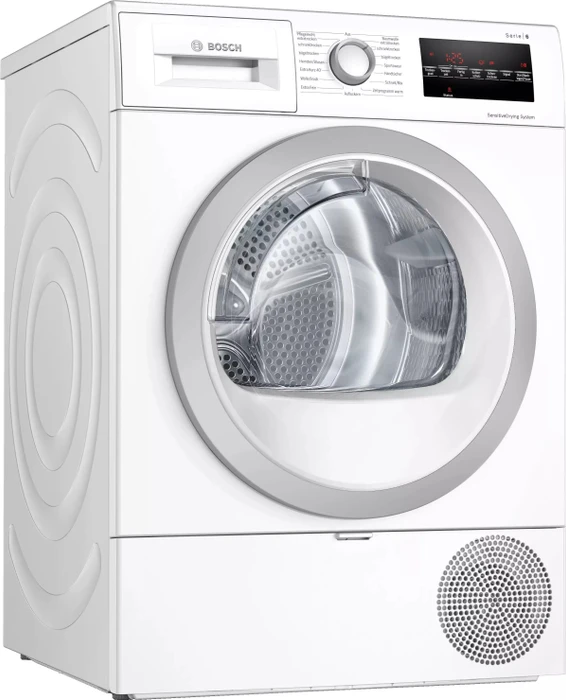
Bosch WTW85T00
Testsieger 2026: Energieeffizienter A+++-Wärmepumpentrockner mit AutoDry-Sensor und AutoClean-Kondensator
- Höchste Energieklasse A+++ – sehr geringer Stromverbrauch
- AutoDry-Sensor für optimale Trocknung
- AutoClean-Kondensator – wartungsarm
ca. 699–849 €
View on Amazon →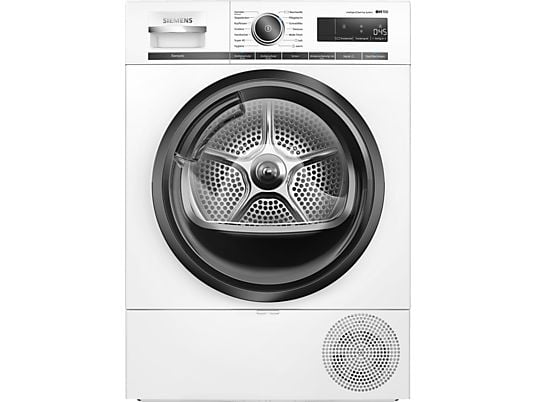
Siemens iQ700 WT47XMH1
Premium-Trockner mit 9 kg Kapazität, selfCleaning-Kondensator und Heat Pump Plus Technologie
- Größte Kapazität: 9 kg für große Haushalte
- selfCleaning-Kondensator – vollautomatisch
- A+++ – niedrigste Betriebskosten
ca. 799–999 €
View on Amazon →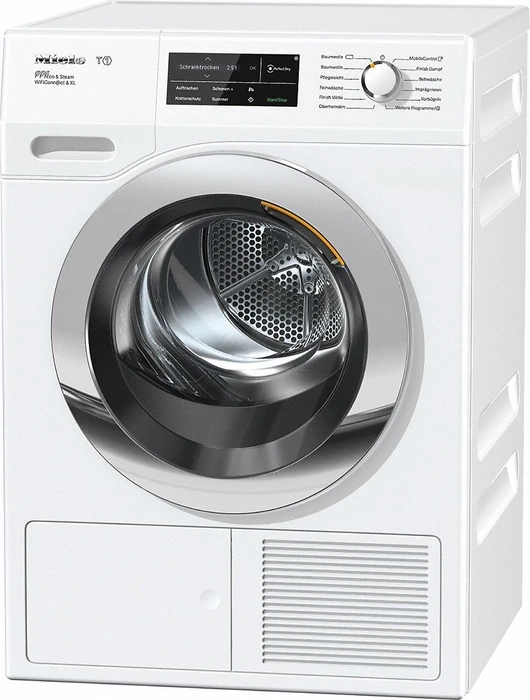
Miele TCJ 690 WP
Leiser Miele-Profi mit SteamFinish-Funktion, FragranceDos und A+++ – die Premiumwahl für höchste Ansprüche
- Leisester Betrieb mit nur 63 dB(A)
- SteamFinish – Kleidung bügelfrei aus dem Trockner
- FragranceDos – Duftfunktion
ca. 1.099–1.299 €
View on Amazon →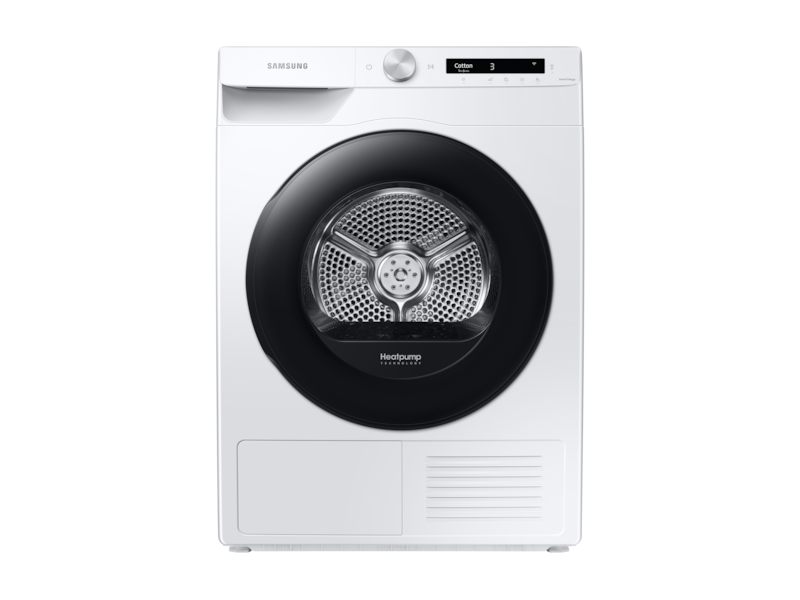
Samsung DV90T5240AW
Preis-Tipp 2026: Großer 9-kg-Wärmepumpentrockner von Samsung mit OptimalDry-Sensor zum besten Preis
- Bestes Preis-Leistungs-Verhältnis im Test
- 9 kg Kapazität – viel Platz für große Wäsche
- Hygiene-Programm mit Dampf
ca. 470–517 €
View on Amazon →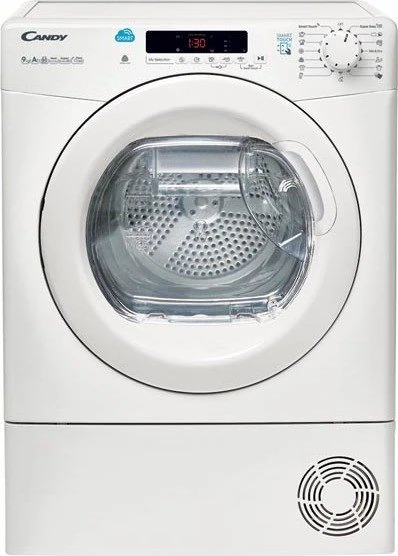
Candy CSO H9A2DE
Budget-Tipp 2026: 9-kg-Wärmepumpentrockner zum günstigsten Preis mit Wi-Fi und App-Steuerung
- Günstigster Wärmepumpentrockner im Test
- Wi-Fi und App-Steuerung inklusive
- 9 kg Kapazität trotz Budget-Preis
ca. 299–399 €
View on Amazon →